This Tiny Home Is Part of Something Much Bigger
There’s a moment early on in this visit where it becomes clear this isn’t just about a tiny house.
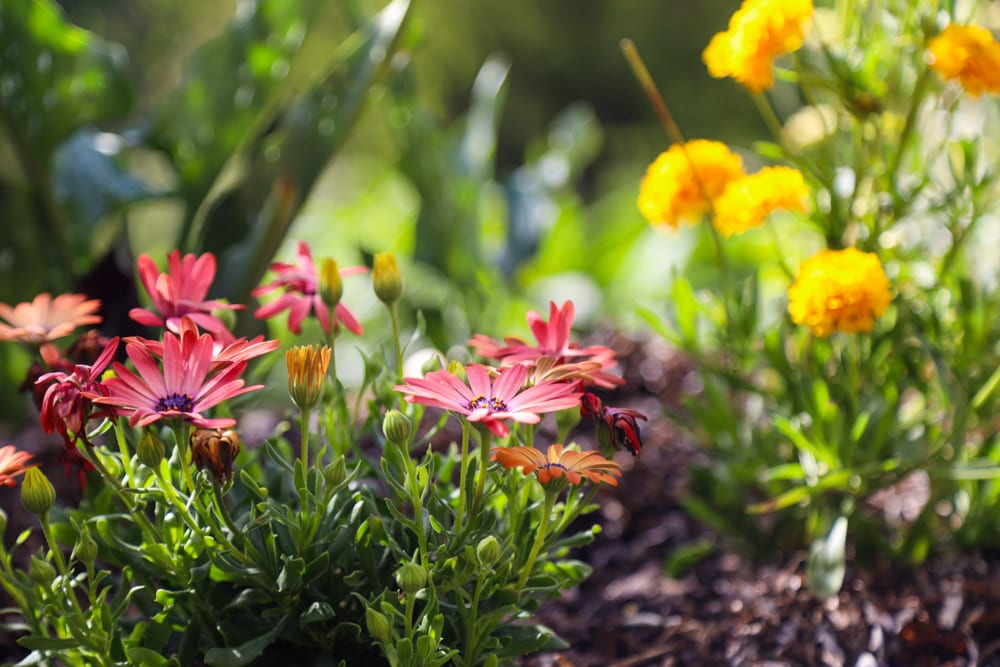
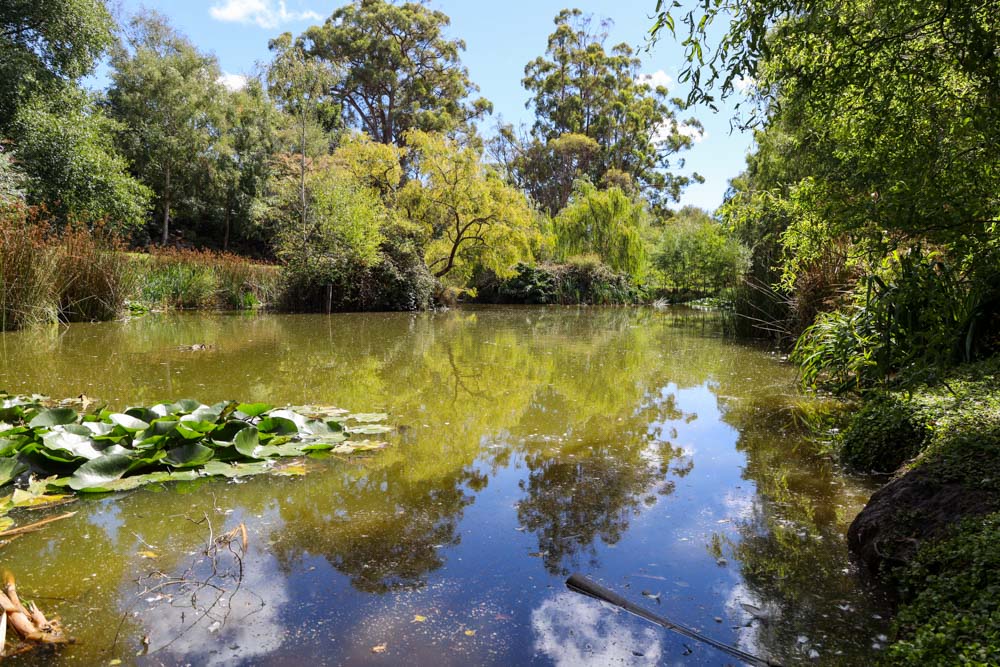
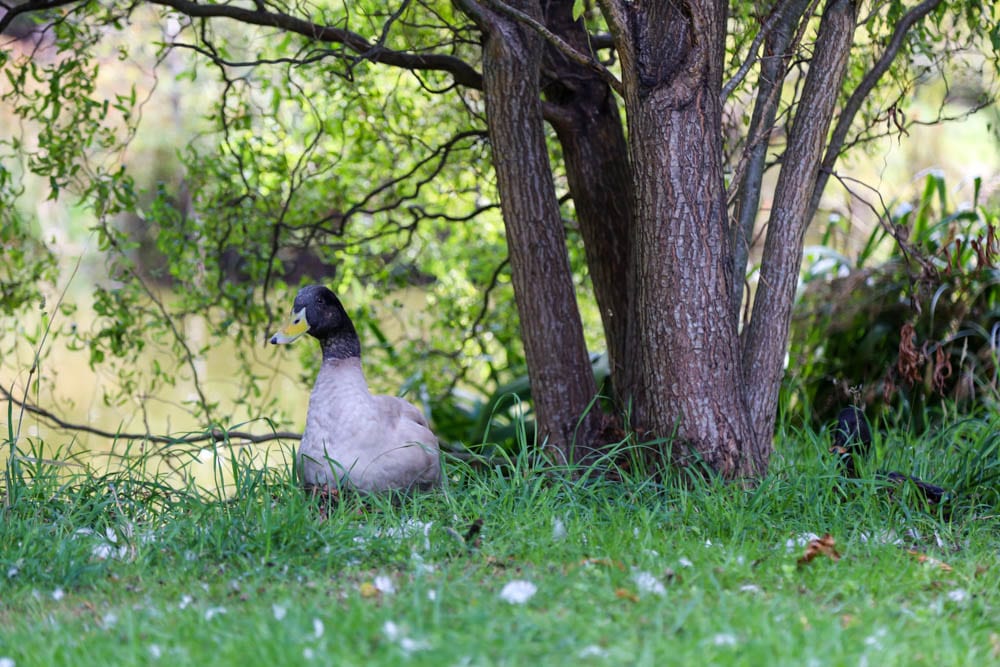
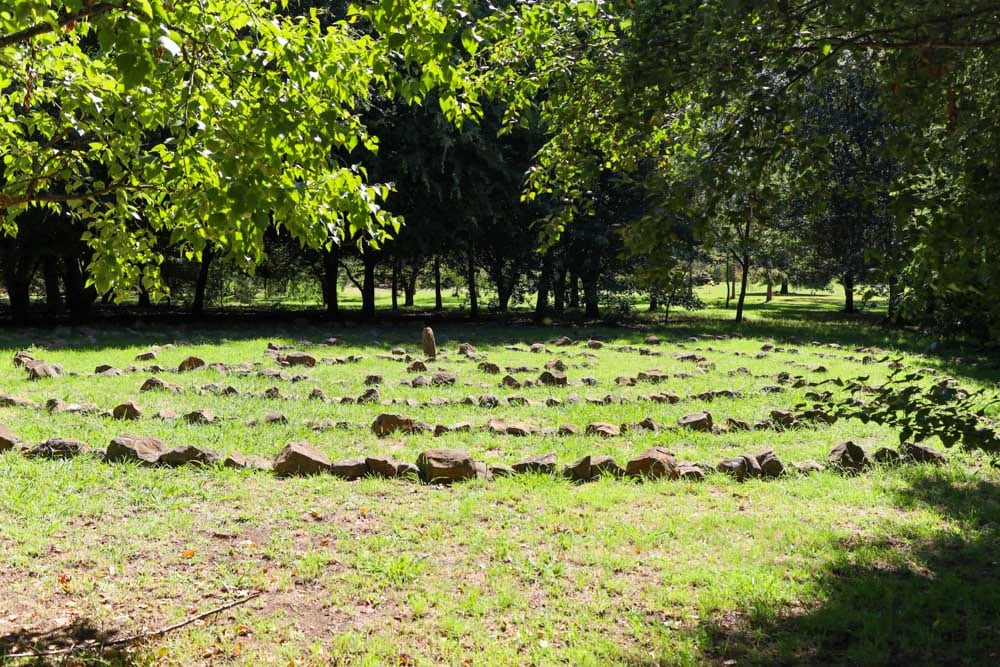
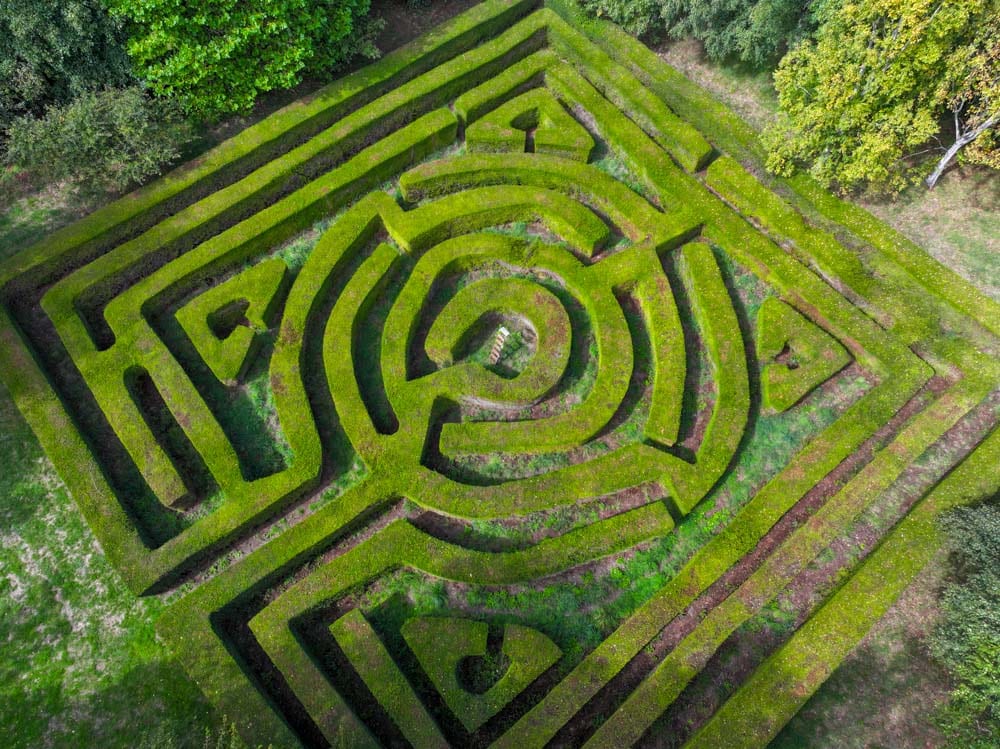
Driving into Rosie and Caleb’s place in Tasmania, the first thing that stands out isn’t the home itself, but the land. It’s the kind of property that immediately feels different. There are gardens stretching out in every direction, animals moving through the space, and unexpected features tucked away as you walk around. At one point, there’s even a maze, something you’d more expect to find on a historic estate than a family property in regional Australia.
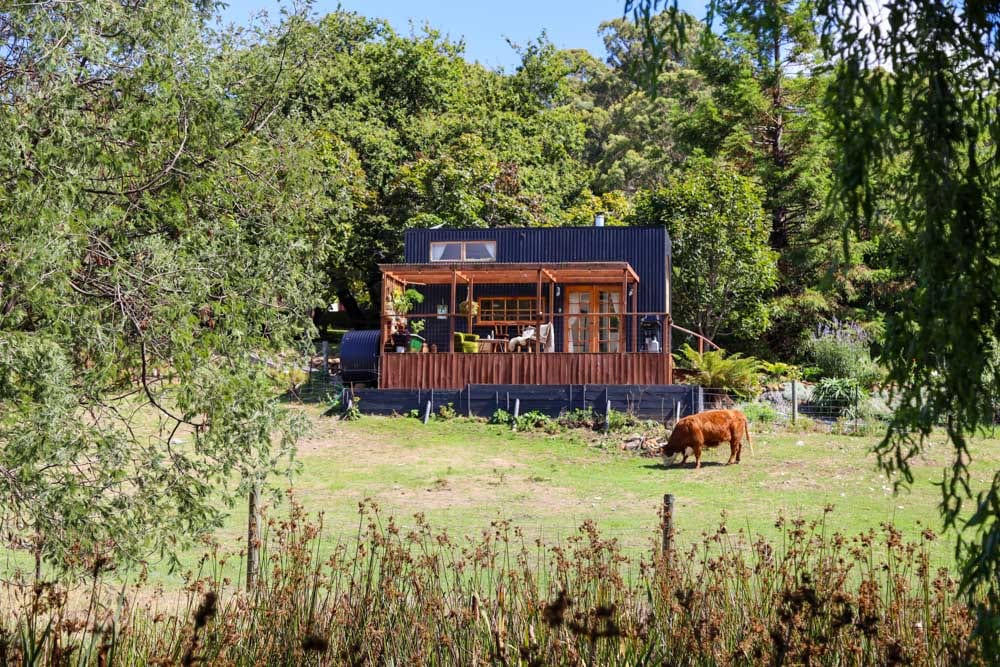
And in a way, that’s exactly what this is. Caleb grew up here. When his family first moved onto the land, it was much simpler, open paddocks with plenty of potential. Over the years, that changed. Trees were planted, gardens established, and slowly the property began to take shape. What started as a family project has turned into something far more substantial, a place that now includes a café, a wellness clinic, and a landscape that feels carefully built up over time rather than designed all at once.
Set within all of this is the tiny home. It’s a relatively recent addition to the property, built by Rosie and Caleb after years of living in share houses and spending time overseas. The goal was simple, to return and create a place of their own here, without losing what makes the land special.
The build itself was largely done by Caleb, drawing on his experience with renovations and a willingness to take on just about every part of the process. Like many DIY projects, it didn’t quite go to plan in terms of time, but what they’ve created is a home that feels settled and considered.
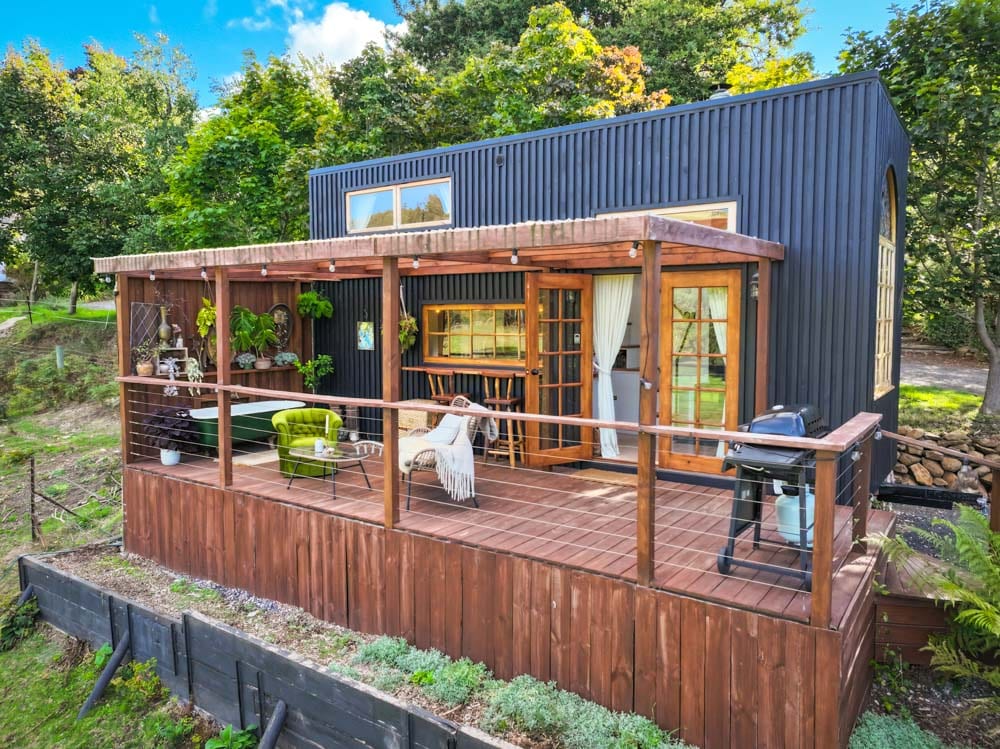
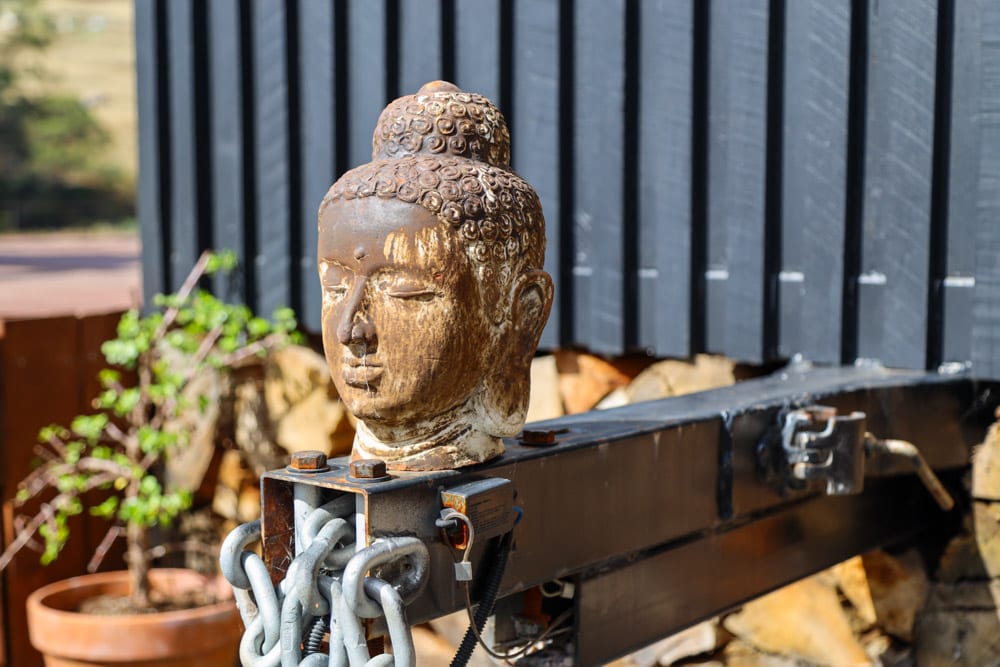
From the outside, the black cladding gives a nod to the local “shack” style found throughout Tasmania, while the windows, many of them reclaimed and restored, immediately soften the look and add character.
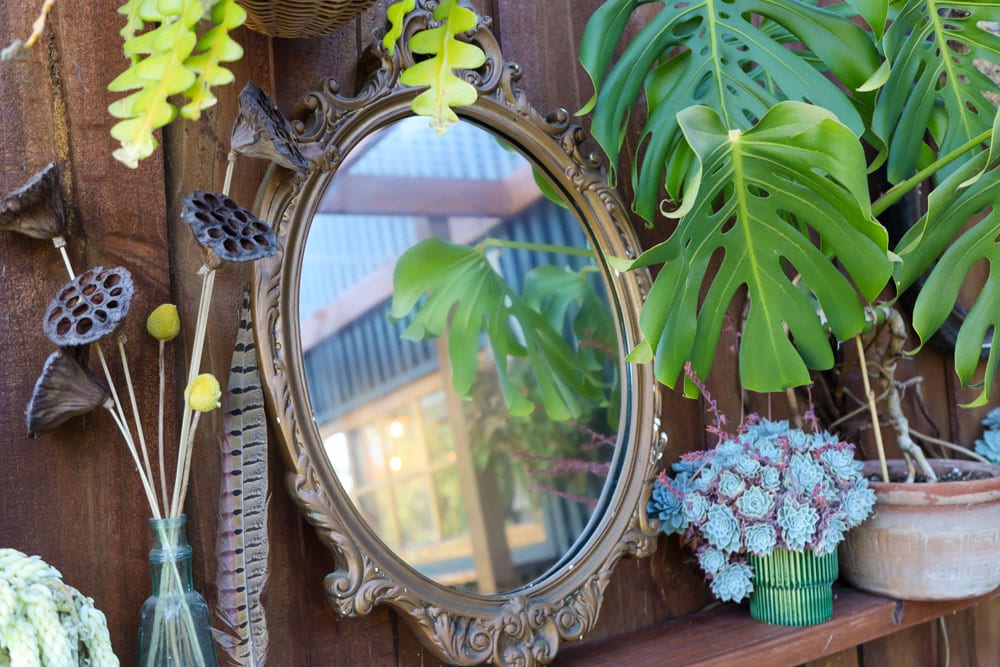
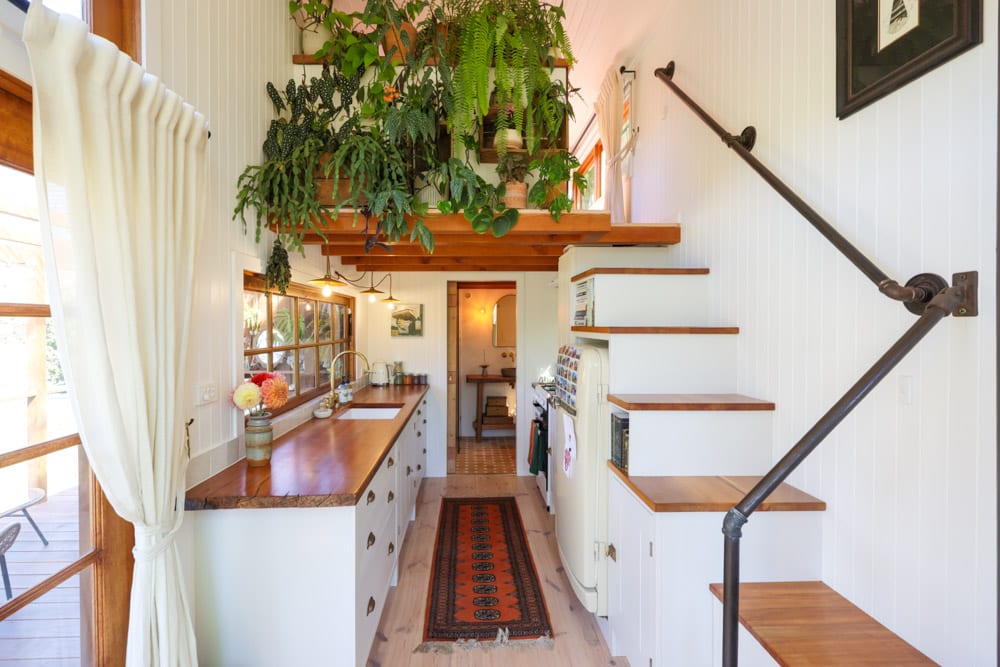
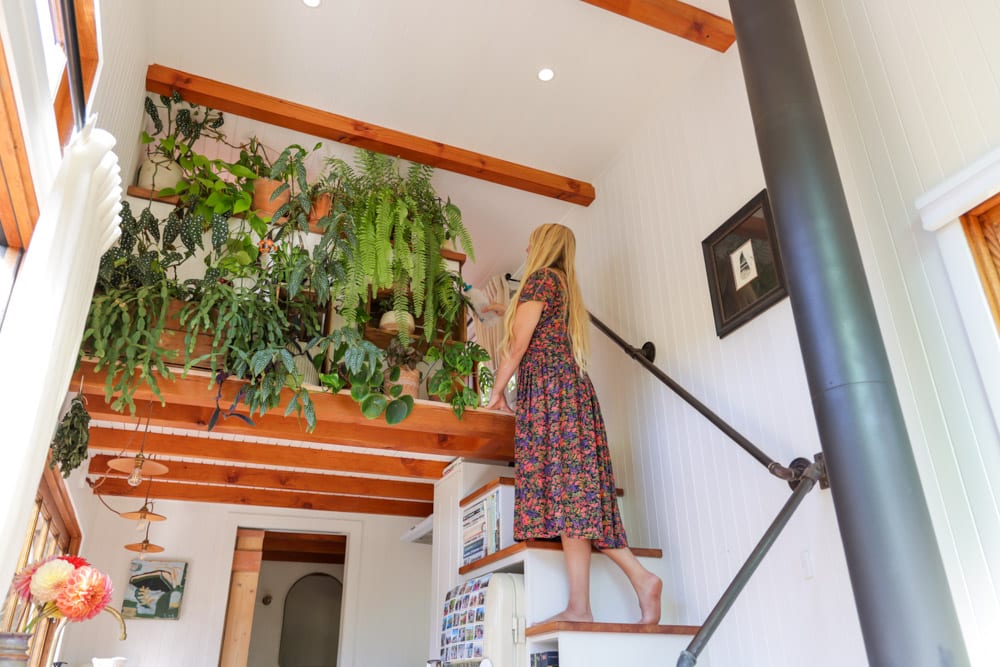
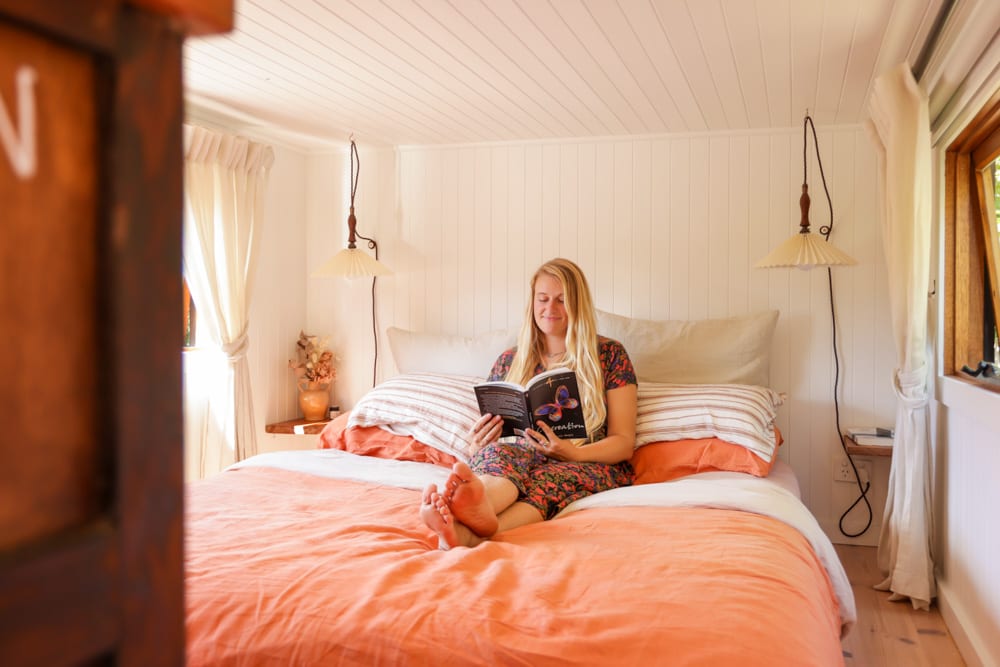
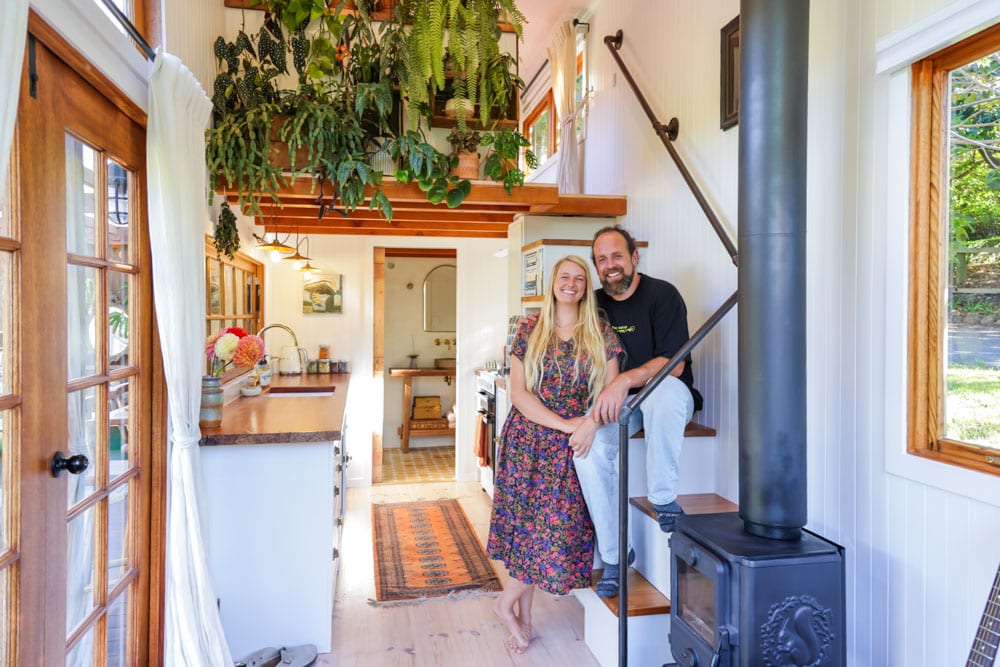
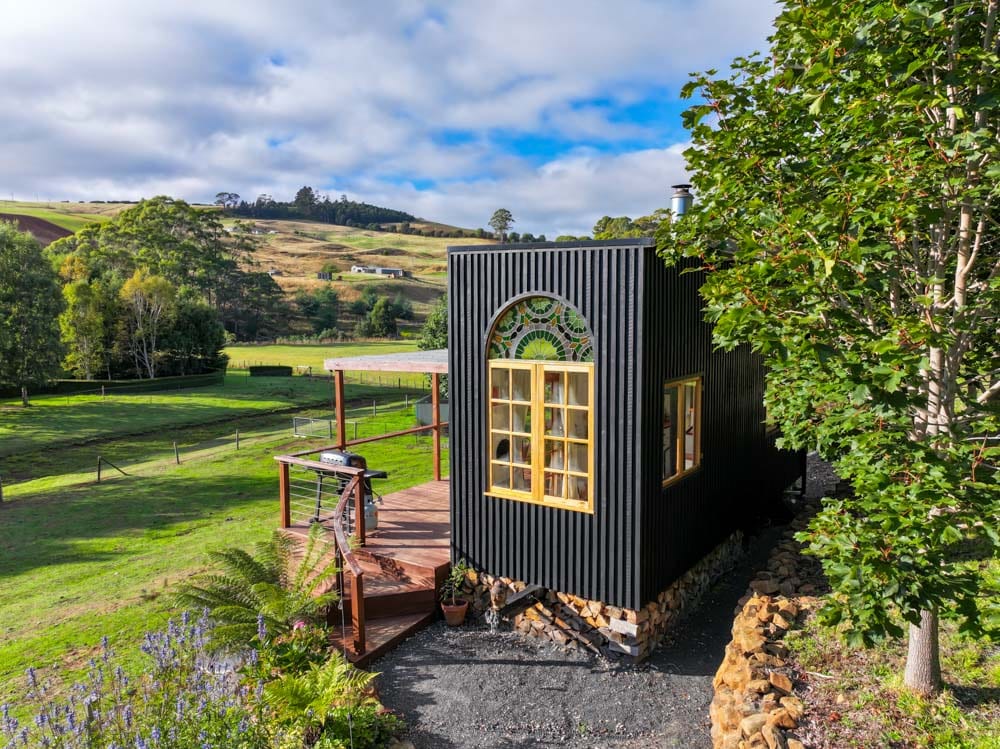
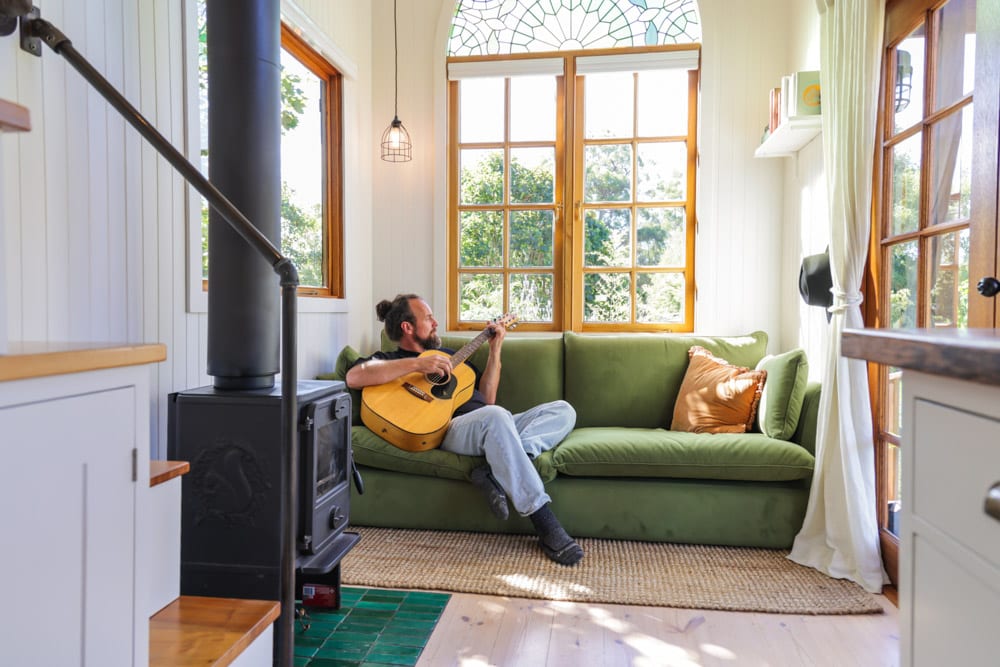
Inside, the space opens up in a way that feels larger than you might expect. There’s a strong emphasis on natural materials, timber features, and light. A stained glass window brings colour into the home, and a plant feature draws your eye upward, connecting the interior to the surrounding landscape.
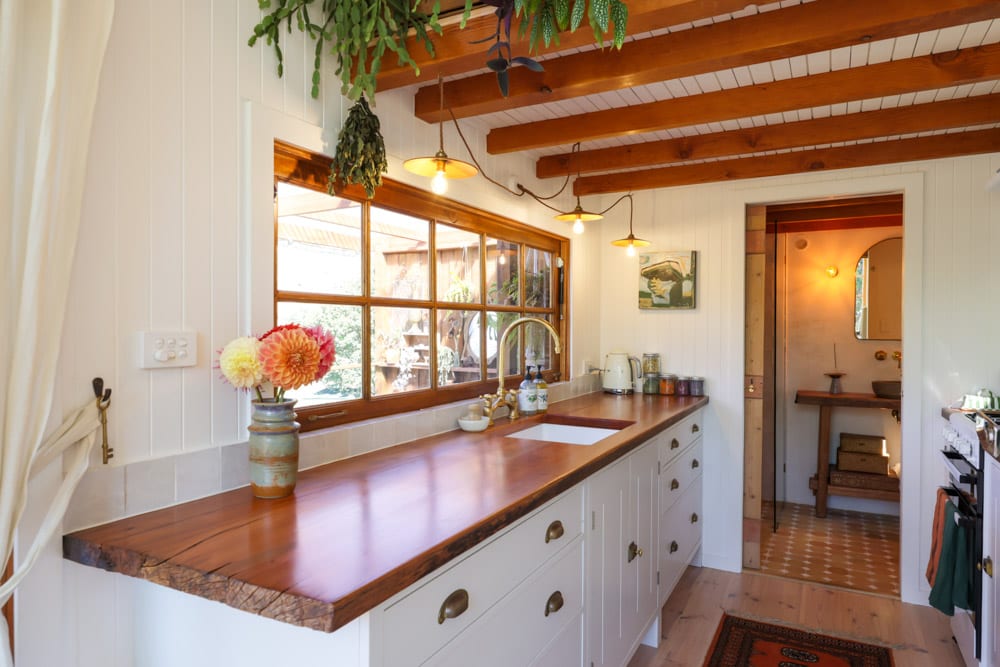
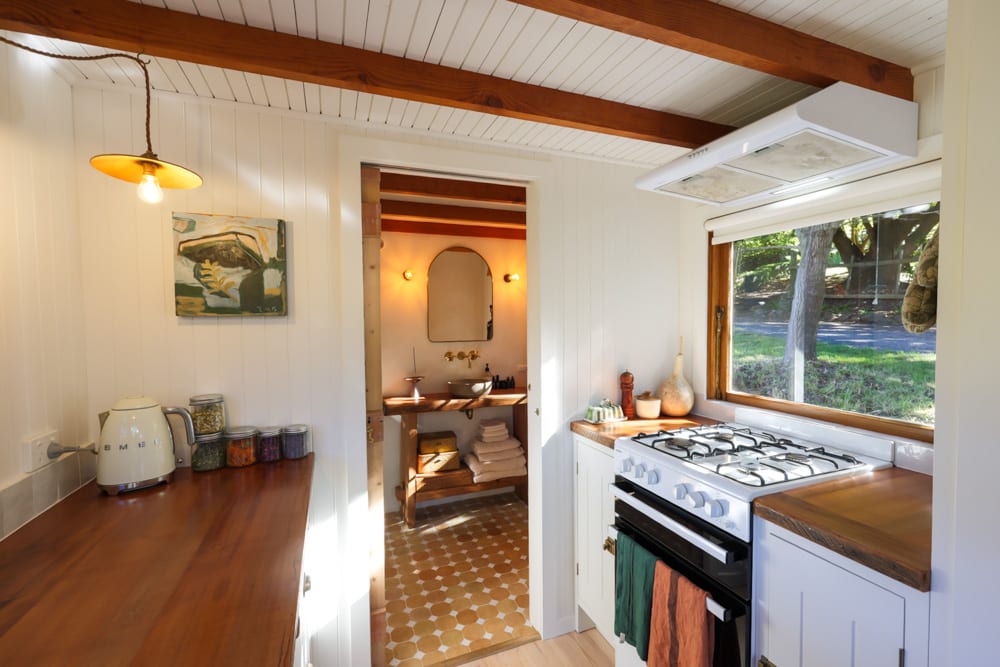
The design leans more toward feeling than pure function. Rather than trying to maximise every possible inch, the focus has been on creating a space that’s comfortable to live in day to day. There’s a generous couch, a proper kitchen for cooking, and a layout that allows for a bit of breathing room.
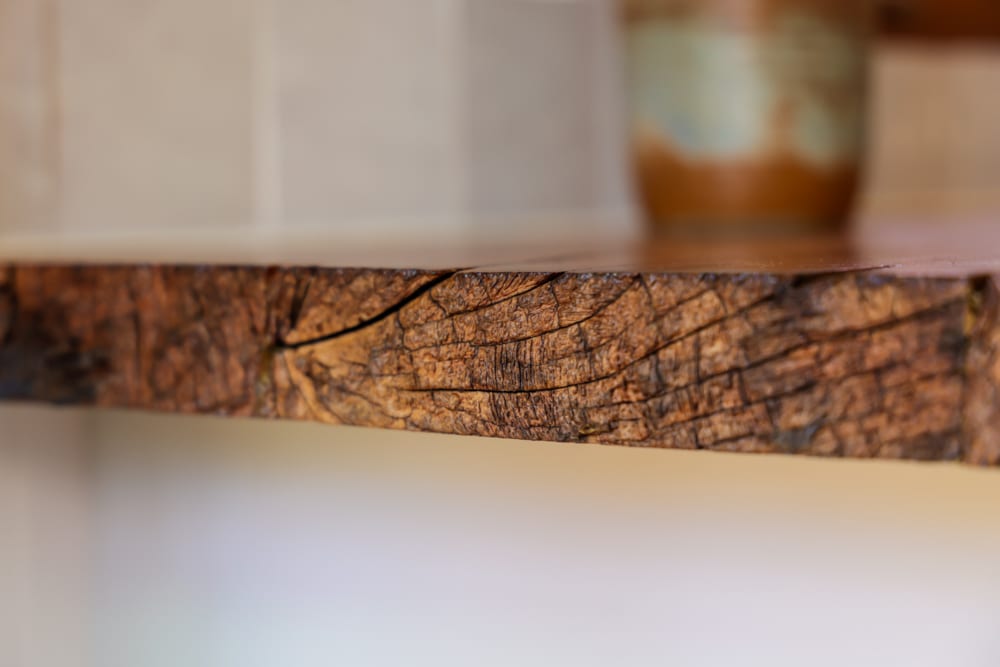
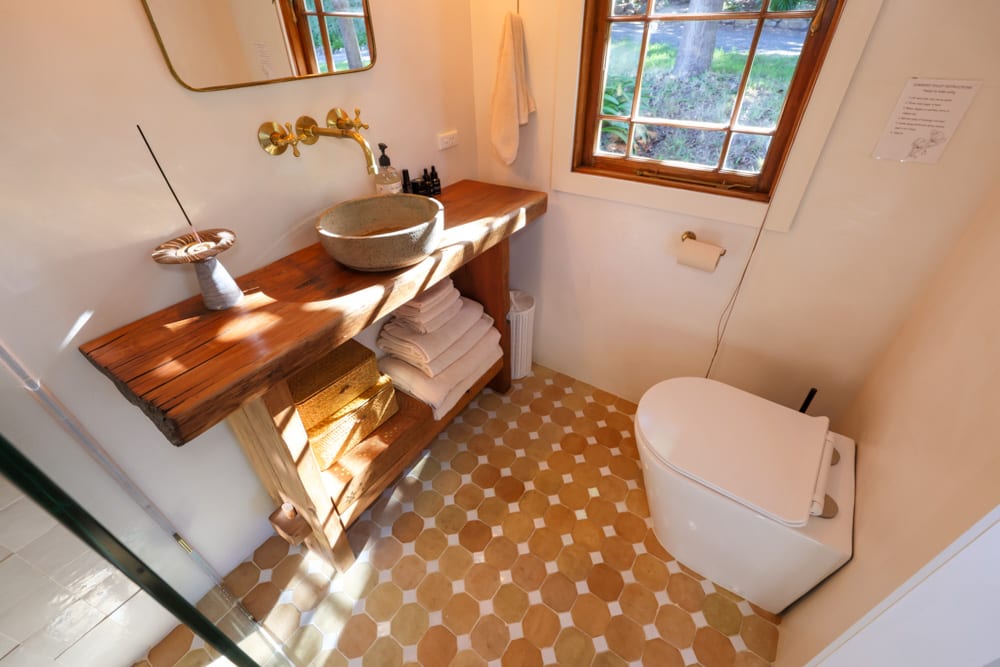
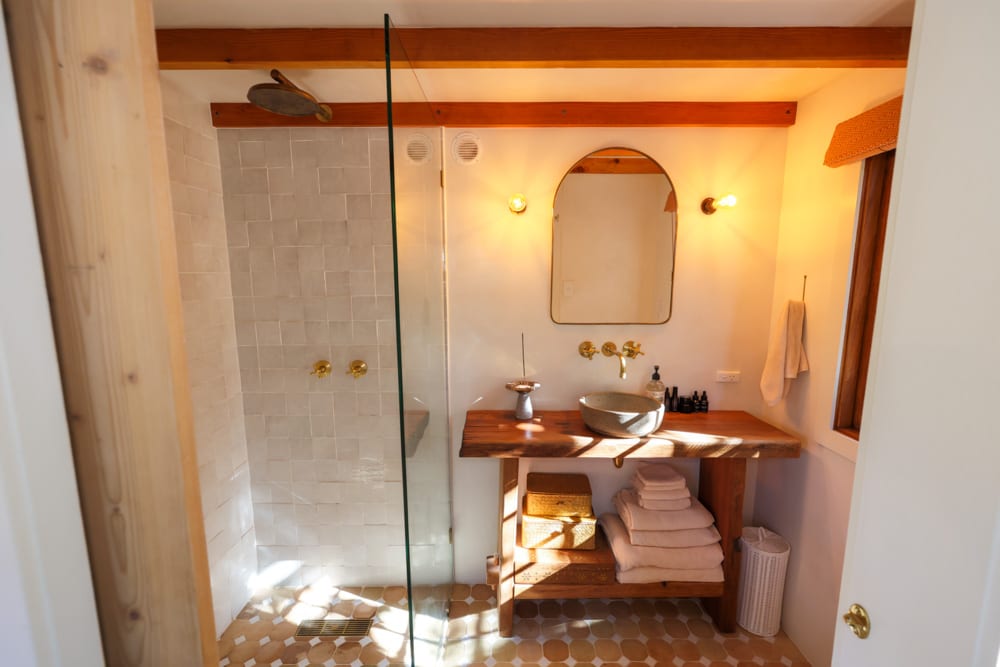
It’s a home that feels lived in, not just designed. That same approach carries through to the details. Timber offcuts have been reused throughout the build, old materials have been given a second life, and many elements have been made by hand. Even the kitchen, which started as a standard base, has been reshaped and customised to suit the space.
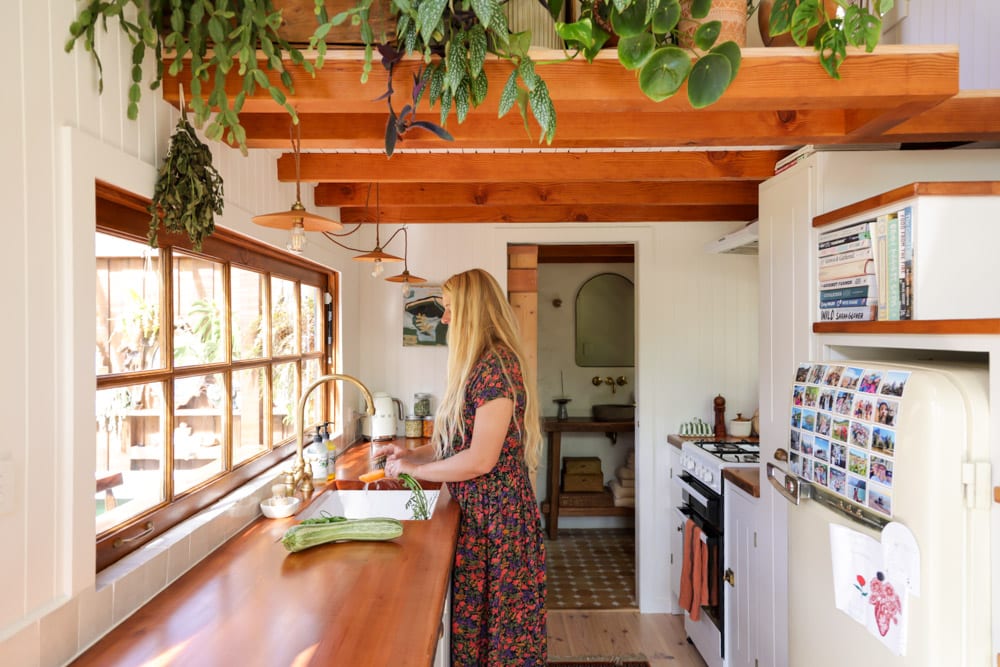
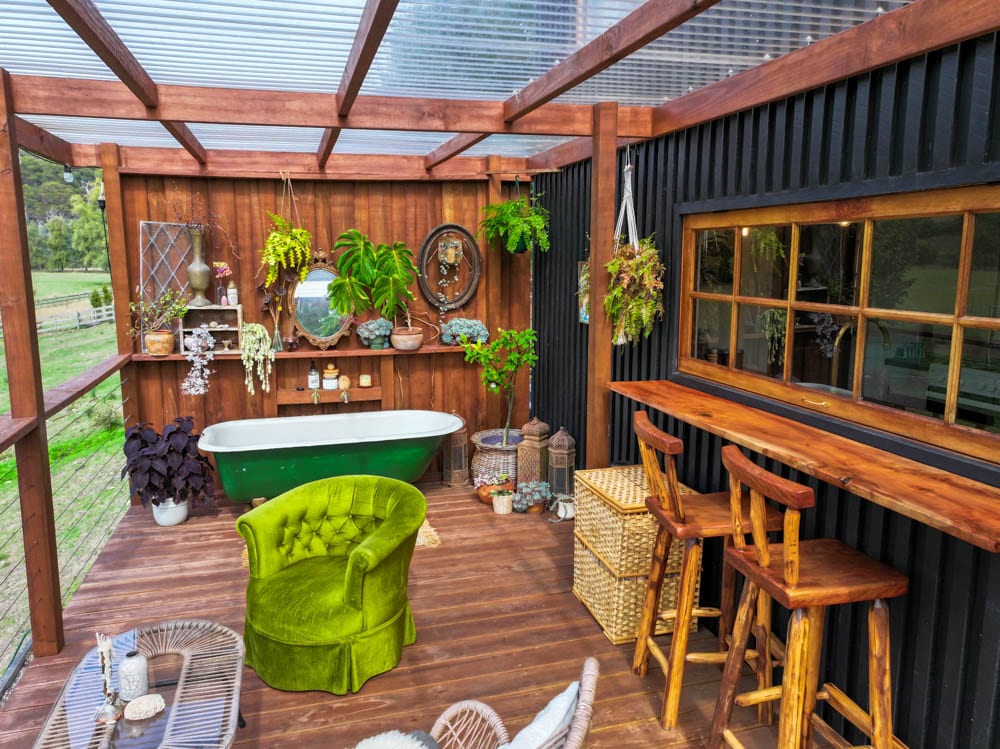
Nothing here feels off-the-shelf. Step outside, and the connection to the land is immediate again. The deck looks out over the property, there’s an outdoor bath positioned to take in the view, and just beyond that, everything continues, gardens, paths, and spaces that invite you to explore.
It’s easy to see how the house fits into the wider environment. What makes this place stand out isn’t just the home, or even the property on its own, but the way the two come together. The land has been developed over decades, shaped by family and time. The tiny house is simply the latest addition, a way for Rosie and Caleb to return and take their place within something that was already there.
And that’s what gives it a different kind of feeling. This isn’t a tiny home trying to be the centre of attention. It’s a small, carefully built space that sits within a much larger story, one that’s still unfolding. You can follow along with Rosie and Caleb's tiny home adventures on Instagram.